
“The Prestige” delves deeply into symbolism, most notably echoing the biblical tale of Cain and Abel. This narrative twist is woven into a tapestry of various symbolic patterns, creating a rich and intricate storyline. Additionally, the film’s underlying themes can be more readily grasped when viewed through the lens of Christopher Nolan’s Jungian influences, which are manifest in the complex interactions between his characters. The movie clearly draws inspiration from Carl Jung’s symbolic interpretations, adding layers of depth to its narrative.
The First Symbolic Pattern
The first notable part of “The Prestige” is the conflict between two magicians on the brink of performing an act. Alfred Borden appears to harbor a grudge against Robert Angier, who enjoys more popularity and is favored by his wife, the assistant in their show.
During the act, Borden, despite being instructed by stage engineer John Cutter to tie the knot differently, ignores the advice. As a result, Angier’s wife is unable to untie the knot Borden has tied, leading to her tragic death, trapped in a water tank.
This scene can be interpreted through Jungian psychology as a quaternity of archetypes: “The Magician” (Robert Angier), “The Wise Old Man” (John Cutter), “The Anima” (the feminine principle represented by Angier’s wife, who also symbolizes the eternal child due to her playful nature), and “The Shadow” (Alfred Borden, whose voice goes unheard in the opening scene). This psychological framework adds a layer of symbolic depth to their interactions and the unfolding drama (Figure 1).
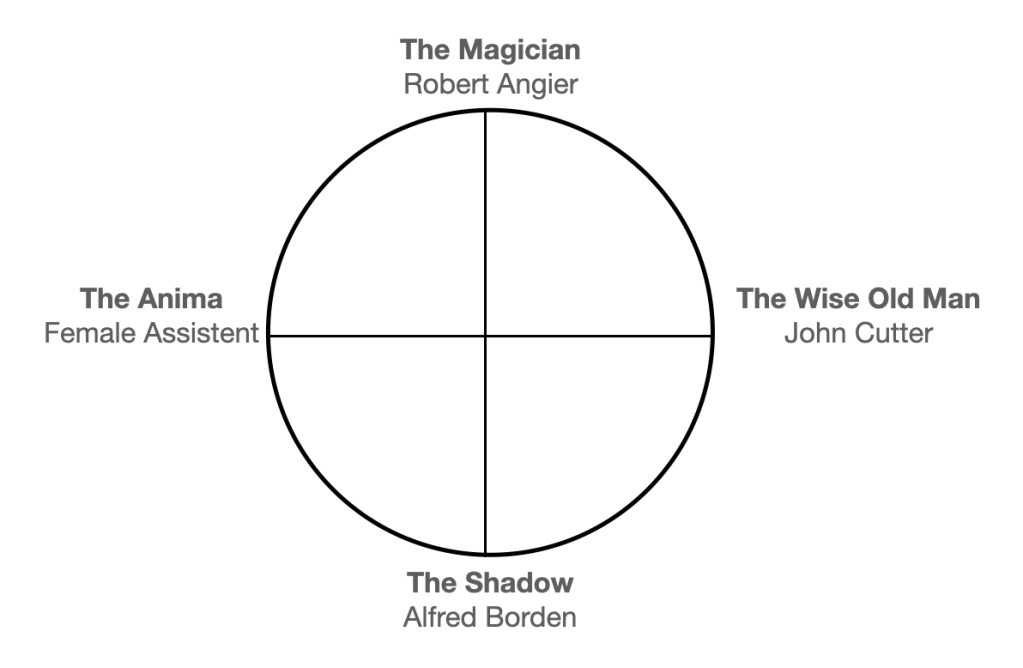
Figure 1. The quarternity of characters in the opening scene.
Before the magic act unfolds in “The Prestige,” there is a noticeable imbalance between Alfred Borden and Robert Angier. In this segment of the movie, Borden assumes a more passive, inferior role, while Angier occupies the dominant superior, ego-driven position.
Borden feels unheard and struggles to communicate his issues with Angier because he has yet to develop his more assertive, disciplined side. As viewers, we’re left in the dark about why Angier is favored over Borden, which reverberates the biblical story of God favoring Abel’s sacrifice over Cain’s.
In this scene, Borden exhibits Cain-like traits, such as jealousy towards Angier. Despite this, he is responsible for tying the knots for Angier’s wife’s hands, which is crucial to her performance. As the movie later reveals, Borden doesn’t remember which knot he tied, indicating he is entirely unaware of his unconscious, inferior side at this point in the story.
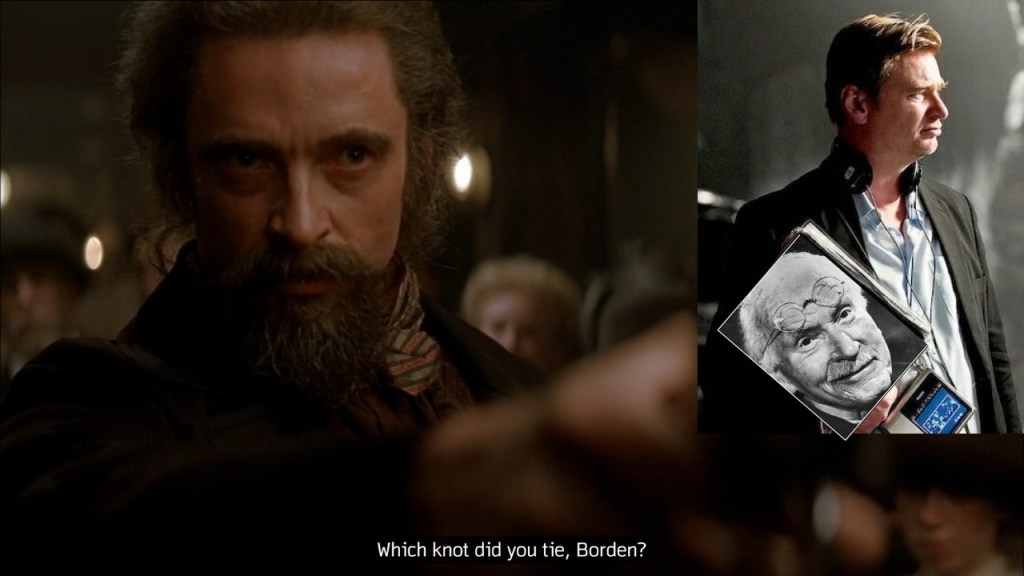
Angier makes a critical error by delegating the responsibility of safeguarding his wife to Borden, especially given Borden’s evident jealousy. This initial magic trick is pivotal, as it sets the stage for the entire movie (Picture 1). The symbolism introduced here foreshadows the themes and conflicts that will unfold throughout the film, establishing a cohesive narrative.

Picture 1. From “The Prestige” The scene where Angier is by the feet of the scene and Borden by the hands.
In ancient Christian symbolism, the feet represent understanding, and the hands symbolize ability. This concept is reflected in the biblical story of Cain and Abel. Abel, as a “keeper of sheep,” embodies ability—holding onto the innocent aspect of consciousness and fostering unity. He is closer to the divine and the mind.
Conversely, Cain, a tiller of the ground, symbolizes understanding from an earthly perspective. He is more attuned to the human body’s needs, much like Borden, who is consumed by his jealousy and desire to be central to the act. Cain represents the movement from the body’s lower realm towards a higher place, while Abel signifies the descent from the mind’s higher realm to a lower aspect.
This symbolic pattern of hands and feet serves as physical representations of these broader metaphysical movements and relationships relating to physical aspects as depicted on the model below (Figure 2).
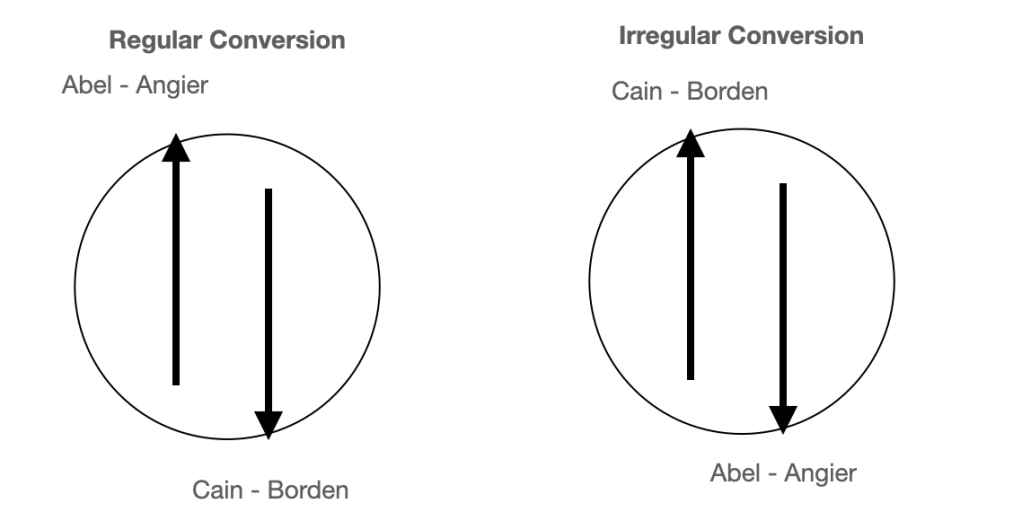
Figure 2. The model depicts a regular conversion of meaning between the lower and upper realms on the left side. Conversely, the right side shows an irregular conversion that leads to confusion. This scene’s setup is an inversion of roles, resulting in a disordered pattern and ultimately, death.
There are subtle references to the crucifixion in “The Prestige,” similar to Jesus washing the feet of his apostles. This act symbolizes the denial of material reality and liberates his apostles from the pride of the flesh. In contrast, the film depicts a woman tied hand and foot, accidentally drowned. This involuntary drowning represents an abrupt encounter with harsh reality, forcing Robert Angier to face his potential involvement in the tragedy. Instead of accepting responsibility, Angier solely blames Borden for her death. This is a profound projection of the shadow and an example of negative anima possession.
Two Quarternities (Part 1)
After the death of Angier’s assistant, there is a culmination and union of opposites. The original quaternity splits into two separate entities, each forming its own quaternity. This marks the onset of the intense rivalry between Borden and Angier, while simultaneously maintaining the magnetic pull between the two characters (Figure 3).
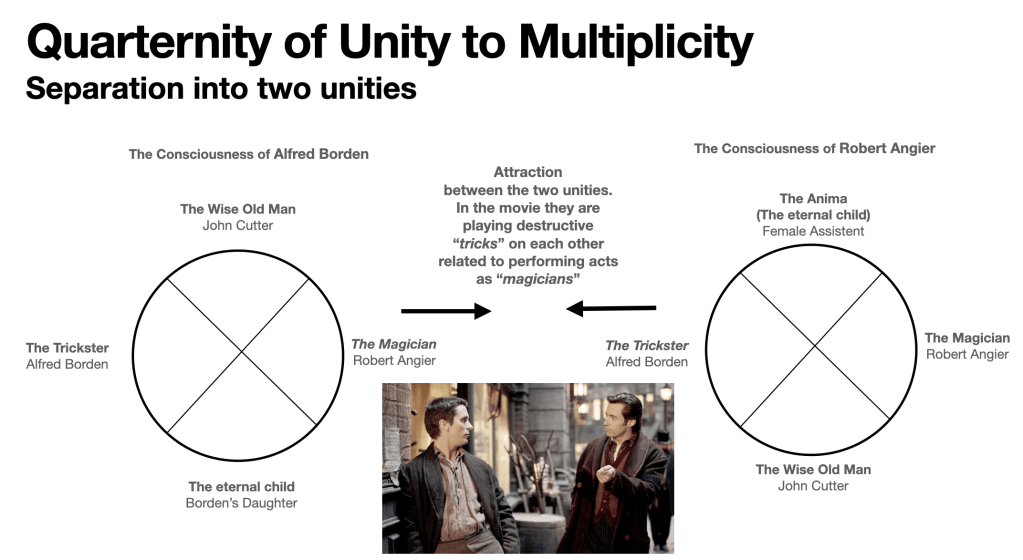
Figure 3. A slide from my YouTube video that illustrates two opposite quarternities manifested where there is an attraction in their unconscious projections of each other.
Borden identifies Angier with the role of the magician, which keeps him acutely aware of Angier during their acts. In contrast, Angier views Borden as the trickster, believing he intentionally tied the knots incorrectly, resulting in his wife’s death. These associations bind them together due to the archetypal relationship between the magician and the trickster. This dynamic creates a volatile attraction, as their personalities, despite their differences, share many traits. This similarity leads to numerous confrontational scenes where they deceive each other during their performances.
Side Note on the two archetypes, Biblical Cosmology and the Christ within
A quick side note on the magician and trickster archetypes is that they both can be seen as veils of perception, merged together. Imagine focusing on a laptop while writing. The surroundings blur, while the precise movements of the eyes shift between the keyboard and the screen. This example illustrates how attention works. We integrate very precise steps in our attention, aligning them with a broader framework. For instance, the larger framework could be writing a book or a paper, and all the sub-steps merge into a fluent perception of time and space towards that specific goal.
We have many specific goals, all oriented towards increasingly larger frameworks. Ultimately, we work to provide for ourselves and our families to become better people. Being a good person is inherently a value of good, not temporally conceived, but integrated into the highest framework—a continuous force of good in the universe, which I would call God.
Returning to the two layers of perception, the first layer operates unconsciously, without conscious notice of the surroundings, reminiscent of the “trickster.” Simultaneously, the other function, “the magician,” doesn’t flood your mind with millions of things but magically lets you focus on one thing at a time. This is difficult to comprehend, given that everything consists of multiple constituents and is integrated into larger and smaller systems, like micro and macrocosms.
Perception can be seen as the “womb” of our worldview, where the conflict between Jacob and Esau represents the masculine and feminine energies disputing before birth. Symbolically, this conflict highlights the integration of the carnal mind and the spiritual mind. Perception shields us from information overload while subtly guiding us toward what nurtures us. It aligns with Jungian functions like intuition and sensation, while judging functions align with thinking and feeling.
Understanding perception as a singular entity is challenging because it operates more like a framework of motivation or intention. This idea is tied to always directing attention toward a higher good, akin to a conscience and the inherent good within all, known in Christian Orthodox tradition as the “Christ within you.”
The Christ within is understood as something that lies between the four functions of consciousness—thinking, feeling, sensation, and intuition. It emerges from the deepest levels of consciousness, spiraling outwards as the “Flower of Life.” This place, where Christ resides, lies at the boundary between the visible and invisible, existence and nonexistence, and life and death.
Two Quarternities (Part 2)
After the death of Angier’s wife, Borden seems to reach a higher level of understanding. He sets aside the eternal child archetype and embraces the wise old man to master his craft in magic. As he hones his skills, he builds a family and achieves his true desires.
The mastery of magic symbolizes a deeper comprehension of reality, unveiling hidden layers of perception and transforming secrets into representations for others. This mirrors the essence of storytelling in movies, literature, and art. In “The Prestige,” magic serves as a metaphor for this transformative power. Borden uses his abilities for good, sharing secrets and love, as shown when he reveals a trick to a little girl. In contrast, Angier uses his skills to gain influence and power, reflecting a misuse of this persuasive ability. This dichotomy echoes the conflict between the influences of Cain and Abel, emphasizing the need for balance and cooperation.
Angier focuses on defeating Borden, often taking shortcuts, which aligns him more with the eternal child archetype. The eternal child represents infinite possibilities, embodied by Angier’s quest for the ultimate magic trick—an endless pursuit without a concrete goal.
On the other hand, the wise old man symbolizes a singular goal, such as starting a family and becoming a better person. Each archetype has both positive and negative aspects. Borden demonstrates unconscious tendencies of a negative eternal child and a positive wise old man, embodied by Nikola Tesla (played by David Bowie). Meanwhile, Angier displays unconscious negative traits of the wise old man, occasionally represented by John Cutter, who, despite sensing a shift in Angier’s character, continues to assist him with his acts.
The Machine
Towards the end of “The Prestige,” the two magicians or tricksters discover the ultimate act: the ability to clone themselves. This concept delves into the fluidity of personality, suggesting that any individual can become fluent in their personality by realizing they are not defined by a single identity, but by their choice of which personality to present.
This revelation revisits the initial conflict between Cain and Abel, focusing on the interpretation of this newfound power.
On one hand, Borden clones himself only once, signaling his character development. He transforms from a jealous background figure to someone who becomes fully aware of his unconscious actions, such as tying the knot on Angier’s wife’s hands. This self-awareness prompts Borden to develop his weaker, conscious faculties.
On the other hand, Angier’s character deteriorates as he becomes obsessed with outshining Borden, who is gaining recognition as a magician. This shift shows Angier adopting Cain-like traits, while Borden embodies Abel-like qualities. The evolution of their personalities directs the narrative, creating a dynamic and evolving conflict throughout the movie.
Throughout the Bible, the story of Cain and Abel reverberates at different levels of abstraction. For instance, the narrative of Jacob and Esau can be seen as a continuation of the Cain and Abel conflict, but elevated to a mental plane, beginning with their rivalry in their mother’s womb. This reflects the union of opposites that many stories strive to integrate, where Cain and Abel can also be interpreted as masculine and feminine, order and chaos, yin and yang, etc.
The Acts
Towards the end of “The Prestige,” we discover that Borden used the cloning device once, employing it to manage his magic acts and even spend time with his wife.
His clone symbolizes Borden in a pure Cain form. However, it is later revealed that Borden had disguised himself as an old man. This represents Borden abandoning the eternal child archetype and focusing his energy in a single direction.
By doing so, he successfully “tricks” Angier, who has become the embodiment of the trickster archetype. The trickster archetype can be seen as the inversion of the magician. While the magician aims to transform matter into meaning, the trickster disrupts meaning from matter purely for amusement. This archetype is challenging to grasp, as it often inverts perception. Consciously, we create meaning from our senses, transforming sensory input into practical abilities. However, this ability operates unconsciously, pointing out our blind spots in unexpected ways. In the movie, Borden tying the knots incorrectly—leading to Angier’s wife’s death—symbolizes his blockage in his own growth and potential.
The cloning machine in the movie symbolizes the regenerative power within every person. This power can be harnessed with diligence and patience, allowing creativity to flourish meaningfully. Alternatively, it can be misused with sloth, envy, and pride, producing clones endlessly, diluting the creative source and resulting in a dispersion of unity.
Borden wisely trains his clone to live his life, enabling him to remain in the background and strategize to eliminate the threat posed by Angier. He understands the limits of this power and avoids overusing the gift he has discovered.
Conversely, Angier overuses the machine, only managing to trick his clones for performances, without replacing any part of his real life. The first time he uses the machine, one of his clones kills him. This symbolizes the dangers of uncontrolled regenerative power, where an unknown entity or personality can eventually dominate the ego, leading to a focus on power and Cain-like characteristics.
The End
“The Prestige” reveals the meticulous work behind the magic act, suggesting that behind every display of beauty and wonder lies a veil that masks the confusion of reality with performance. This is not merely a struggle with the shadow but also an effort to integrate the anima (the inner unconscious feminine aspect), as Borden and Angier seek conflict in their relationship rather than meaning in their lives.
Borden’s journey throughout the film leads him to realize that his performances are ultimately insignificant. He sacrifices his relationship with his job and his wife to secure his daughter’s future.
The battle with the shadow within man is a recurring theme, and this storyline remains prevalent today, often depicted as a man sacrificing himself to save a woman and allow her to rebuild society. This inversion of the hero story has become so common in recent films that it can seem depressing in most films. However, “The Prestige” manages to restore the narrative by the end of the movie, highlighting the ego’s true disruption if it is not voluntarily dissolved to achieve union with its counterpart.
Borden’s story differs in that he wins his freedom through his struggle, providing a more meaningful resolution. Although he tragically loses his wife, she may symbolize the mask Borden wore to deceive Angier into believing he understood his life intimately.
Angier, on the other hand, represents the belief that performance is paramount. This mindset blinds him into thinking that by persuading people, he can control and maintain power. The movie reveals that Angier has a basement filled with drowned clones, symbolizing his willingness to sacrifice others but not his own ego.
In contrast, Borden voluntarily endures sacrifice, resolving the conflict by harmonizing understanding and ability, ultimately outsmarting Angier.
Outro
I hope you liked my short analysis here.I hope that some of the symbolism caught on and there was some pointer towards how I navigate such a story and how I like to see the symbolism in movies.
Like and comment the video if you want to see more of this stuff and I hope to upload more videos on symbolism.
Thank you for your time, see you 🙂
All The Best, Alan Olewnik

 The Symbolic Universe
Leave a comment